There are special days designated to honor Veterans that have served. These days may include ceremonies, parades, placement of flags, placement of wreaths, and/or purchase of poppies. However, the most visible and the most powerful recognition of a Veteran is the headstone under which they have been laid to rest.
The responsibility of honoring our Veterans should not fall solely on the shoulders of the families. It is also the responsibility and duty of the public for which the Veteran conducted his or her service. Unfortunately, after several generations the families and the public begin to lose sight and forget the sacrifices of Veterans. Visits to graves to honor the memory of a Veteran begins to fade away.
Veteran headstones tend to deteriorate over time, making them unsightly and the inscriptions unreadable. Causes of deterioration include weathering, growth of moss/fungus, burrowing animals, fallen tree limbs, shade tree roots, poor water drainage, landscape maintenance methods, and vandals. If your Veteran is in a National Cemetery or a State Cemetery, the effects of those impacts previously mentioned are dealt with quickly and properly. However, in cemeteries under the jurisdiction of various municipalities with elected officials, the conditions of the Veteran sections is often overlooked and underfunded. Yet cemeteries are a popular location for people to walk, run, bicycle, etc. They are incredibly quiet and peaceful, often allowing for reverence and needed reflection.
Signature Project
The Walla Walla Chapter, Washington Department of the Reserve Organization of America, has taken on a signature project to improve the appearances and conditions of Veteran headstones and markers locally. The effort involves two cemeteries located within the city of Walla Walla, Wash. The Fort Walla Walla Post Cemetery (FWWPC) and the Mountain View Cemetery (MVC).
An American-Indian Wars outpost named Fort Walla Walla was established in 1856. It was one of the longest-occupied military posts in the Northwest and was the center of regional activity for much of its existence. Throughout its history, the post has been home to Dragoon, Infantry, Artillery and Cavalry units. The presence of the fort helped keep peace between the Euro-American settlers and the native tribes during much of this period.
The FWWPC was established in 1858 and has 142 grave markers with several graves appearing to be mass graves moved from other locations. The actual number of burials is not certain. An Army Quartermaster Report published in 1903 indicated there were 159 soldiers and 24 civilians interred at FWWPC for a total of 183. The Fort was closed in 1910. Over time Fort Walla Walla was transferred to several agencies to include a portion transferred to the City of Walla Walla for use as a park: including the designated cemetery area. This transfer occurred in 1958.
The second cemetery, MVC, has burials dating back to the 1850s. MVC is an active cemetery and is comprised of the city cemetery and cemeteries owned by the Masonic Lodge, International Order of Odd Fellows, and the Catholic Church. There are several areas designated for Veterans to include, the Civil War, Spanish-American War, World War I, World War II, Korean War, Vietnam War, Persian Gulf War, and the Afghanistan War. There are more than 3,000 Veterans laid to rest, most of them in the designated Veterans sections and the remainder spread throughout the MVC mixed with family plots and in the mausoleums.
Description of the Signature Project
Headstone Cleaning
The most basic task to restoring dignity and honor is to maintain the appearance of the headstones.
Local teams of volunteers have been organized to periodically tend to the cleaning of Veteran headstones. A biodegradable cleanser (known as D/2), water, and a natural bristle brush, with the help of a good strong arm, will clean up and preserve stone markers nicely. If this routine is continued on a scheduled basis, the headstone will look good for many years. A different technique using Mission Restore for cleaning bronze markers has shown great results. Unfortunately, both processes are labor intensive. Pressure washing is often suggested but this can cause more damage to the headstone than time and nature. Pressure washing is highly discouraged.
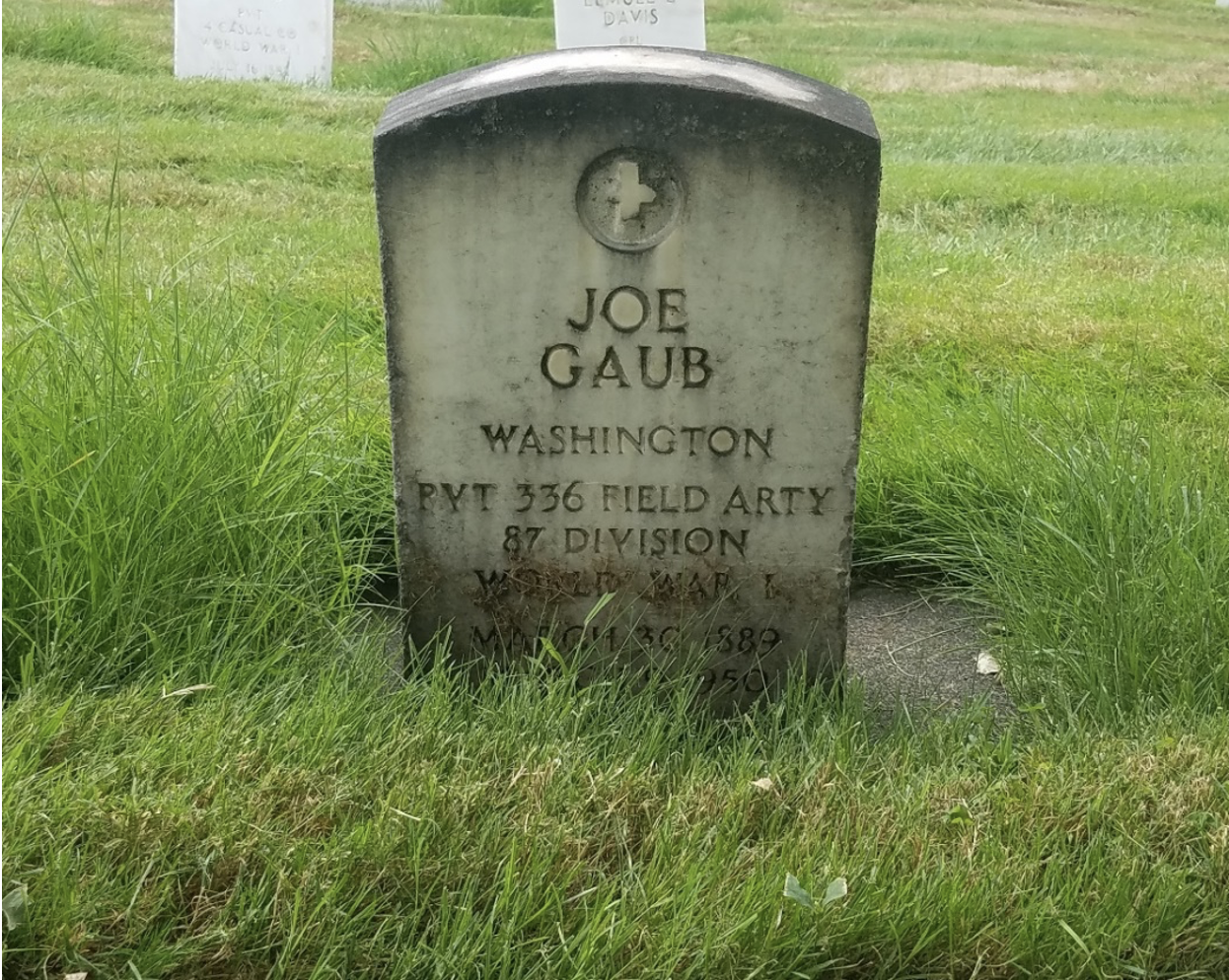
Example of a stone marker in need of cleaning in Mountain View Cemetery, Walla Walla, Washington.
Headstone Restoration and Replacement
Stone and the quality of the stone used has varied over the years. Some stone weathers more quickly or is damaged more easily by maintenance methods.
The fix to damaged headstones is replacement or realignment. However, the original placement of graves in our Veteran sections was never consistent over the years. Efforts to fix the problems may include re-contouring and re-landscaping the ground for improved drainage, placement of headstones in improved foundation anchor points, and alignment of headstones in a uniform manner which reflects the appearance of dignity and honor to these Veterans which they deserve from all of us.
The level of effort to restore or replace a headstone is more equipment intensive and it comes at a greater cost. Fundraising, seeking grants, asking for in-kind donations and services from professional and skilled community members, and partnering with others is critical in this venture.
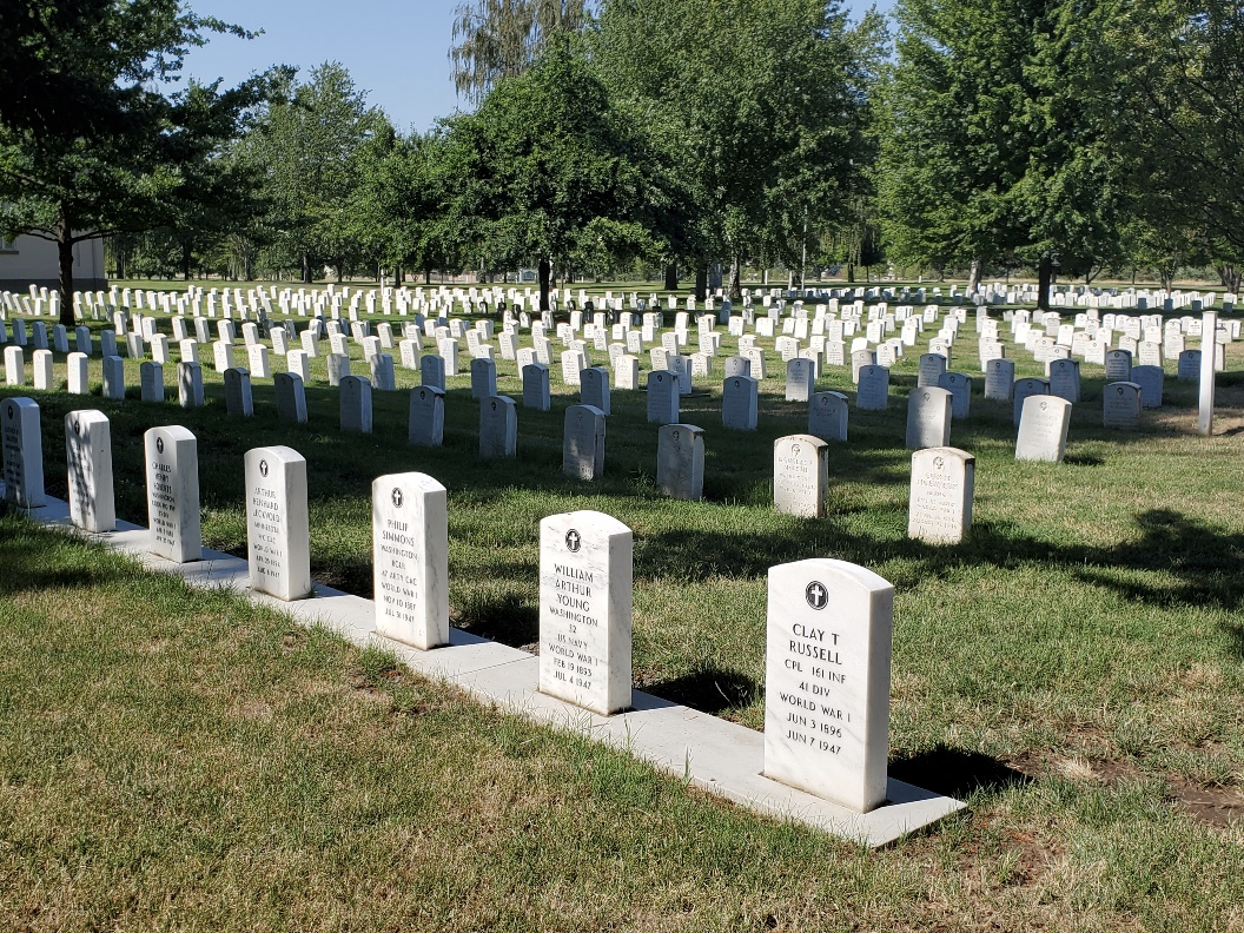
After re-contouring the landscape, the first row of headstones was replaced in a new anchor system technology in Fall 2019. Mountain View Cemetery, Walla Walla, Washington.
Other Actions
In addition to cleaning, restoring, or replacing headstones, there are opportunities to make our Veteran sections more inviting to family, friends, and the public.
- Ground Penetrating Radar studies can help determine if other burials exist. Often grave markers disappear leaving uncertainty on the number of burials. In our situation, the actual number of soldiers, their families and some Native American Indians buried at FWWPC is unclear.
- Sharing the story of our Veterans who have been laid to rest and interpreting the history of the actions our country asked these Veterans to perform is very educational and brings us all closer to their sacrifices.
- Finding ways to protect the headstones from vandalism, thru use of security measures can be worth the cost.
- Enhancing the serenity of our cemeteries by removing old and dying trees, replacing them with a better species of trees. Proper distancing of shade trees from the grave site will reduce damages from roots as well as falling branches.
- Implementing ways to share burial information and locations through web-based databases and improved mapping will benefit not only the general public but encourage visits by family and genealogist working on family histories.
Veteran Headstone Project Partners
Walla Walla Chapter’s progress has been slow as we build a support base to Honor Those who Served. Initial efforts to build relationships with those who have similar interests has allowed for common ground and plan development.
- The City of Walla Walla owns both cemeteries so are responsible for the operation and maintenance.
- Fort Walla Walla Museum has an important role in the interpretation of the history surrounding Fort Wall Walla and the U.S. Indian Wars in Southeastern Washington, Northeastern Oregon, and Central Idaho
- Confederated Tribes of the Umatilla Indian Reservation might have Tribal Members or members of other Northwest Tribes buried in the FWWPC and they have the technology for performing Ground Penetrating Radar studies.
- Sons of Union Veterans of the Civil War have a Monument & Memorial Grant Fund intended to assist Camps and Departments in their efforts to refurbish and restore Civil War related monuments and memorials. MVC falls within the footprint of Department of Columbia and Fort Walla Walla Camp No. 3.
Walla Walla Chapter of the ROA meets quarterly with the Veteran Headstone Project Partners. We monitor all ROA volunteer hours and submit them to the City of Walla Walla monthly.