
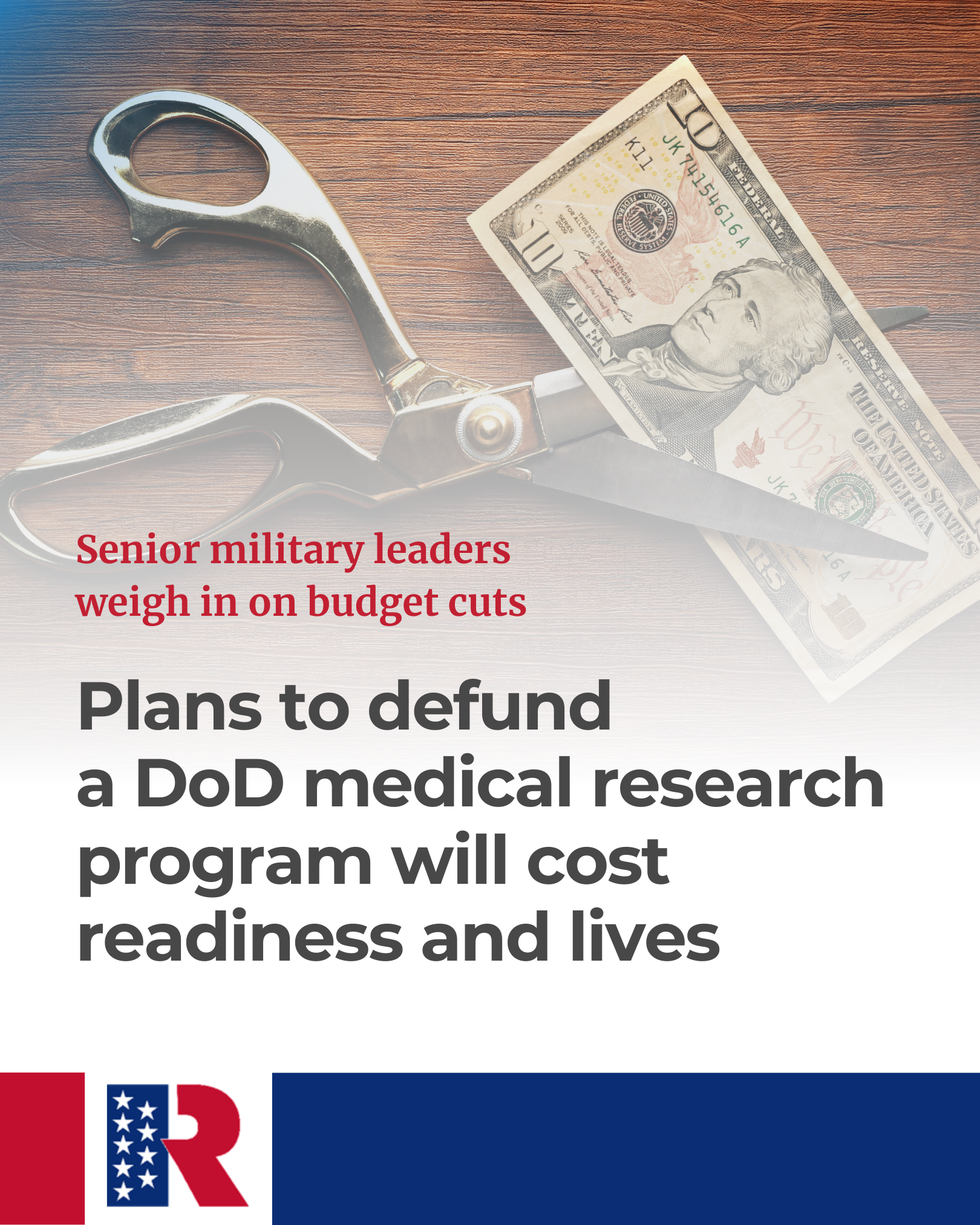
Thousands of American lives were saved during the war in Iraq and Afghanistan due to improvements in military battlefield care based on research by military physicians and nurses that is now threatened by budget cuts.
Projections of zero funding for a proven Department of Defense research program in Fiscal Year 2026 and the outyears will be catastrophic not only to military nursing, but also to civilian nursing and the care that nurses provide to all Americans.
Our warfighters have gone into battle since 9/11, confident that, if wounded or injured, their survivability was the highest in history, with a survivability rate greater than 90 percent. They knew they would receive the best in medical and nursing care from the battlefield to home. That survivability rate was achieved by the science that undergirds evidenced-based care.
Since 1992, the TriService Nursing Research Program (TSRNP) has funded research conducted by military nurse scientists to improve the care provided to our warfighters. This program was created by the late Senator Daniel K. Inouye, who credited his life to the nurses who cared for him following his wounds suffered in WWII.
This program is housed at the Uniformed Services University of the Health Sciences (USUHS), in Bethesda, Md. The science that has come from TSRNP has led to improvements in resuscitation following severe injury and bleeding, musculoskeletal studies that have improved servicemember readiness, PTSD treatments using alternative therapies, and care for families during and after deployment. Military families have also benefited from the funding provided to military nurse scientists from this program.
Financial support for TSNRP began as an earmark, followed by contributions from the services, and finally as Operations and Management monies through USUHS. The amounts have been essentially flat for 30 years, with occasional dollars directed by Congress to be added to the “pass-through” funds from the USUHS budget. Despite flat budgets, military nurses have conducted over 500 studies.
Not funding TSNRP now and in the outyears will have serious second-, third-, and fourth-order effects. The morale of military and civilian nurses in military hospitals will fall as they realize they cannot provide the best in evidence-based care. They will fear harming those entrusted to them. Servicemembers could be harmed, further reducing their readiness.
Military leaders, aware that care delivered on the battlefield is outdated, will question whether their servicemembers will be able to deliver the lethality they have in the past. Family members will worry more about deployments and what might happen if their loved one cannot get the best science-based care. Wounded and injured servicemembers will worry about survival or if they will have the latest in equipment, such as prostheses.
Evidence garnered through military nursing research defines care for our service members and eventually these best practices find their way into civilian nursing as well. To stop research that directly improves the lives of those who volunteer to serve in our armed forces will mean that care no longer based on research could result in outdated practices and harm. It could also erode recruiting and retention. Who would want to serve if they are not confident of the best in medical and nursing care, especially in war?
We urge Congress to direct funding to TSNRP with a budget line item of $13M. This funding will allow TSNRP to continue to advance the science and research needed to produce new, cutting-edge evidence-based nursing practices that will directly lead to improving the care provided to our warfighters on the battlefield.
This funding will continue to improve the health and wellbeing of our deserving military servicemembers and their families, a community of volunteers who continue to provide selfless service to our nation day in and day out. After all, they are the 1 percent who volunteer to wear the uniforms of our nation. Don’t they deserve the best nursing care America can provide?
Article contributors include:
Margaret C. Wilmoth, PhD, MSS, RN, FAAN, a retired U.S. Army major general, professor of nursing and president-elect, ROA.
Patricia A. Patrician, PhD, RN, FAAN, a retired U.S. Army colonel, recipient of TriService Nursing Research funds and retired professor of nursing.
Deborah Kenny, PhD, RN, FAAN, a retired U.S. Army lieutenant colonel, is a past director of the TriService Nursing Research Program (TSNRP) and a professor of nursing.
Jeffrey E. Phillips, a retired U.S. Army major general, is the executive director of the Reserve Organization of America.