
Soon after I picked up my right hand and began serving as an Army Chaplain, I started to learn about and have a relationship with Chaplain George Fox, Chaplain Alexander Goode, Chaplain Clark Poling and Chaplain John Washington – the Four Chaplains.
I, and others, would study them and retell their story many times and at different events, classes and ceremonies. Their story takes on special significance on Feb. 3 each year. That day is their “special” anniversary, known as Four Chaplains Day.
This year we mark the 79th anniversary of the sinking of the USAT Dorchester, remember those lost that day, and the heroic selfless service of four Army chaplains serving on that ship.
Many articles, books, songs and films retell their amazing story.
All four of these chaplains were assigned to the USAT Dorchester; this ship was a former passenger steamship but was recommissioned as an Army transport ship during WWII. That fateful night, the Dorchester was part of a convoy transporting more than 900
troops from Newfoundland to an American base in Greenland.
Those icy waters were often referred to as “torpedo junction” due to German submarine activity. In the early hour of the night after midnight, the Dorchester fell victim to a torpedo from U-223 which hit the boiler room and knocked out electrical power.
The ship sank in 20 minutes; there were only 230 survivors of the 904 on board.
Who are the four chaplains and what did they do on that night that makes them memorable?
Soon after the war began, these four clergymen answered God’s call once again and were appointed as chaplains and lieutenants in the U.S. Army in the spring/summer of 1942. These four met at the U.S. Army Chaplain School, then at Harvard, and ultimately
served together on the Dorchester.
Fox was a Methodist minister from Vermont who had served in the ambulance corps in WWI; Goode was a reform rabbi from New York. Poling, a Baptist minister from New York, was also the son of a WWI chaplain. Washington was a Roman Catholic priest from New
Jersey.
Their work together provides a wonderful snapshot of what chaplaincy is all about – chaplains of different faith groups and traditions working closely together to bring God’s comfort, peace and strength to ALL service men and women in their care.
After the torpedo struck, there was chaos, panic and fear throughout the ship.
The chaplains made a conscious decision to stay and work together in assisting as many as possible get to the few lifeboats that were still available; they also made the decision to sacrifice themselves and not get on one of those boats.
In fact, after distributing all available life jackets, they gave their own life jackets, coats and gloves to others. As the ship was going down, they were seen linking arms, singing hymns and offering prayers.
For their act of heroism, they were posthumously awarded the Distinguished Service Cross and Purple Heart. They were nominated for, but were not awarded, the Medal of Honor. However, Congress instituted the Chaplain’s Medal for Heroism to
commemorate their actions; this decoration has only been awarded once.
These four chaplains continue to teach us lessons about doing our duty and selfless service; they teach us about courage and bringing comfort to others. One of the survivors remembered those chaplains and called it “the finest thing he had seen or hope
to see this side of heaven.”
Another said that their voices were the only thing that kept him going. These four chaplains, ordinary men, Soldiers, were able to make an extraordinary difference by standing together and serving others.
Let’s reflect on their story and work to look past our difference and work together to bring comfort and encouragement to those around us.
Blessings!
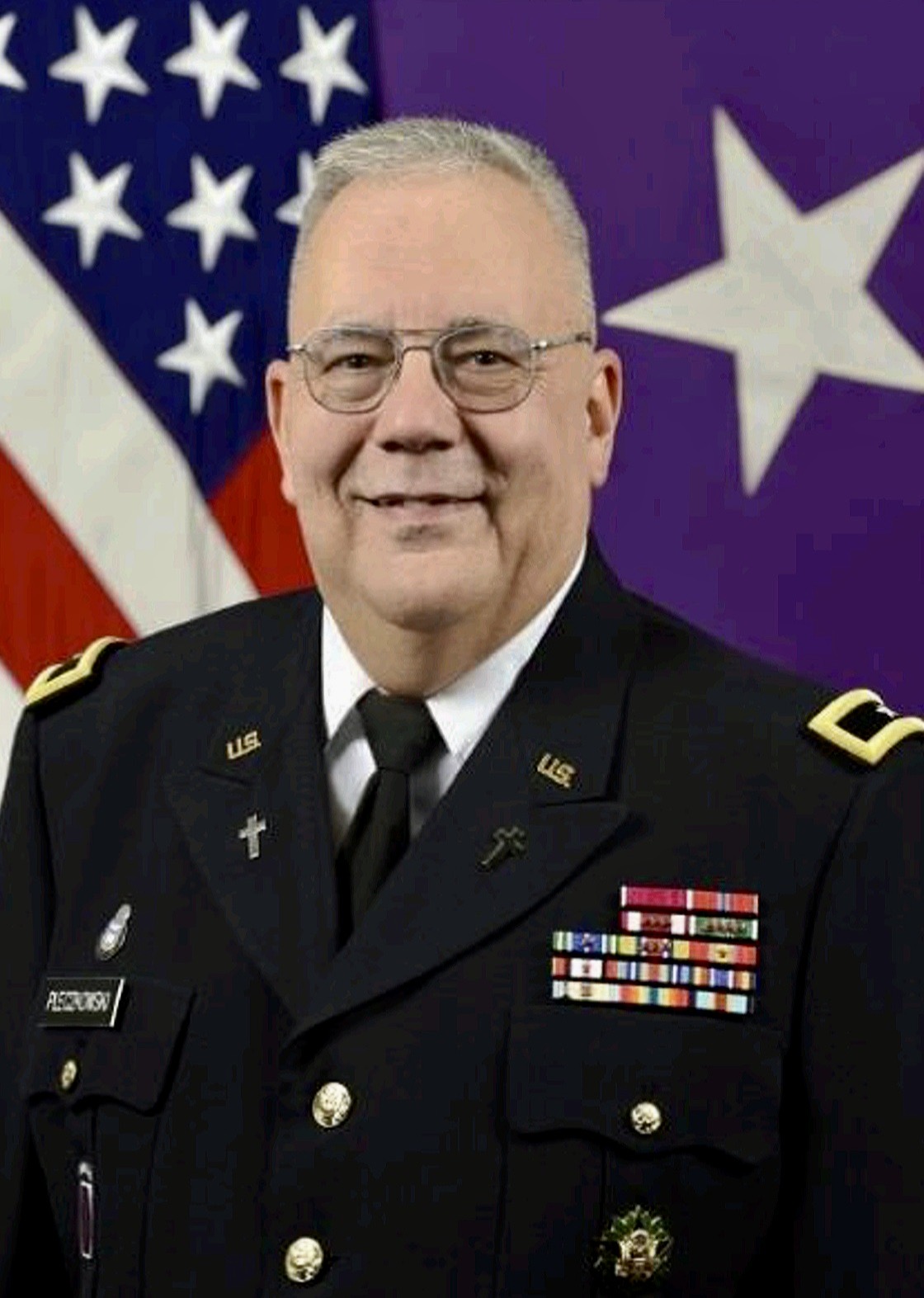
Brig. Gen. Bob Pleczkowski
ROA National Chaplain
Retired U.S. Army Chaplain